




























My Blog
Posts Tagged ‘Home Mortgage Tips’
The Down Payment: Everything You Need to Know About Your Down Payment on a New Home
 Whether you’re just starting to shop for a new home or you’ve found the perfect house and are crafting your offer, if you’re taking out a mortgage to help cover your real estate purchase you’ve likely given some thought to your down payment.
In today’s blog post we’ll explore the topic of down payments and share how the amount you put down on your home will affect your mortgage.
How Your Down Payment Affects Your Mortgage
As you know, your mortgage is essentially a large long-term loan that is paid back with interest over a set time period. If you put a large down payment against the purchase, you will not only reduce the amount that you’ll need to pay back, but you’ll also reduce the lender’s risk and this may allow them to provide you with lower interest rates.
Conversely, if you can’t place very much down on your home and you’re left borrowing as much as you can you may find that your mortgage comes with higher interest rates or that some mortgage lenders refuse your business entirely.
The Gold Standard: 20% of the Purchase Price
For the vast majority of homeowners it’s expected that they will be able to contribute at least 20 percent of the home’s purchase price. For example, if you are buying a $200,000 house you’ll need to have at least $40,000 available for your down payment. Note that the 20 percent figure isn’t a hard requirement; some mortgage lenders will be willing to approve you with less, but you may be subject to private mortgage insurance, higher interest rates and more.
Saving Up Your Down Payment
Depending on your financial situation and the cost of your home you may find that saving up 20 percent of the purchase price to put toward a down payment places a strain on your finances. If you still have a year or more before you’re ready to jump into the real estate market, consider putting some money aside each month that can be used for a down payment. If you receive any lump sum payments like a tax return, save this in your down payment fund as well.
As you can see, your down payment is one of the more important considerations you’ll have to make when buying your home with a mortgage. If you have questions about mortgages or down payments, be sure to call your local mortgage professional today as they’ll be able to share their guidance and expertise to help you make the best financial decision.
Mark Taylor | Arizona Home Loans | Blarming | Will You Listen to Me | Arizona Short Sales | Arizona Foreclosures | Arizona FHA Loans | Arizona USDA Loans | Real Estate Websites | Arizona HUD Homes | Ariona VA Loans | Fix My Broken Credit | Arizona Mortgage | Arizona Short Sale | Power Ranch Bank Owned Homes
Refinancing Your Mortgage: Understanding the Various Types of Refinancing
 Whether you’ve been thinking about ways that you can draw on your home equity to fund a renovation project or you want to take advantage of low interest rates before they rise again, refinancing your mortgage is an excellent option.
In today’s blog post we’ll introduce mortgage refinancing and discuss a few of the ways that you can use this tool to help accomplish your financial goals.
Cash-In and Cash-Out Refinancing
Many homeowners refinance their mortgage in order to take some of the home equity out for other purposes. In a “cash-out” refinancing, you take out a new mortgage loan which is greater in value than your current loan. After paying off the existing mortgage you’ll receive a check for the difference which can then be reinvested in home upgrades or put to use elsewhere in your financial portfolio. You may also be able to get a better interest rate in this type of refinancing, saving additional money over the long term.
Do you owe more on your mortgage than your home is currently worth but still want to take advantage of lower interest rates? If so, “cash-in” refinancing is an option that can help you to avoid the mortgage insurance costs that you may be facing when you refinance. As the name implies, cash-in refinancing will provide you with a loan that is for less than the amount that you currently owe, so you’ll need to add “cash-in” to make up the difference.
Home Affordable Refinance Program or “HARP” Refinancing
If you find that you’re unable to refinance your mortgage as the value of your home has declined, the federal government’s Home Affordable Refinance or “HARP” Program may be an option. HARP was developed to assist homeowners in the wake of the 2008 financial crisis and the resulting instability that was caused in the real estate and mortgage markets. If you have been making your mortgage payments on time, have a mortgage guaranteed by Fannie Mae or Freddie Mac and your current “Loan to Value” ratio is greater than 80% it’s likely that you’ll qualify for HARP refinancing.
The above are just a few of the ways that you can refinance a mortgage to better suit your needs and financial goals. Contact your local mortgage professional today to learn more about refinancing and to discuss how you can tap in to the home equity that you’ve built up over time.
Mark Taylor | Arizona Home Loans | Blarming | Will You Listen to Me | Arizona Short Sales | Arizona Foreclosures | Arizona FHA Loans | Arizona USDA Loans | Real Estate Websites | Arizona HUD Homes | Ariona VA Loans | Fix My Broken Credit | Arizona Mortgage | Arizona Short Sale | Power Ranch Bank Owned Homes
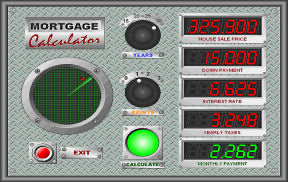
How to Use a Mortgage Calculator to Determine Your Monthly Payments, Interest and More
 Are you thinking about using a mortgage to buy a new home? Buying your own piece of local real estate is a major financial investment and one that can require some pretty complex math to fully understand.
In this blog post we’ll discuss mortgage calculators and how to use one of these tools to determine your monthly mortgage payments, interest charges, amortization periods and more.
Determining Your Principal and Down Payment Amounts
To get started with a mortgage calculator you’ll need to know how the price of the home and how much you intend to contribute as a down payment. Generally speaking you’ll want to place a down payment of at least 20 percent in order to avoid having to pay for private mortgage insurance and to give you access to better interest rates.
Choosing Your Interest Rate and Amortization Period
Now that you have an idea of the amount of mortgage financing you’ll need, the next step is to choose your interest rate and amortization period. Different lenders will offer different interest rates for every one of their mortgage products, so again you’ll want to play around with these numbers and run the calculation to see which combination of mortgage financing, interest rate and amortization period gives you a monthly payment that suits your budget.
Using a Mortgage Calculator for Refinancing
If you’re thinking about refinancing your current mortgage you can also use a mortgage calculator to help make the math a bit easier. Simply use your outstanding mortgage balance as the principal amount and then choose an amortization schedule that fits your financial goals. Be sure to keep an eye on your interest payments, as you may find that by refinancing to a longer amortization period your monthly payments go down but your total interest paid is quite a bit higher.
Don’t Forget the Closing Costs
Finally, don’t forget that there are numerous “closing costs” – fees, taxes and more – which you’ll need to factor in to your overall calculation. Closing costs will include everything from home appraisal fees to government filing fees and property taxes, and will vary depending on the home and the city or community you’re buying in.
While online mortgage calculators can handle the tricky math to determine monthly payments and interest costs you may still find that you have questions about your mortgage or some aspect of the process. For more information, contact your local mortgage professional and they’ll be happy to share their advice and expertise.
Mark Taylor | Arizona Home Loans | Blarming | Will You Listen to Me | Arizona Short Sales | Arizona Foreclosures | Arizona FHA Loans | Arizona USDA Loans | Real Estate Websites | Arizona HUD Homes | Ariona VA Loans | Fix My Broken Credit | Arizona Mortgage | Arizona Short Sale | Power Ranch Bank Owned Homes
Did You Know That Your FICO Score Can Drastically Affect Your Mortgage? Here’s Why
 Are you about to apply for a mortgage loan in order to buy a home? If so, you may be curious about your credit score and how this might impact your financing.
Let’s take a quick look at how FICO credit scores can affect your mortgage and share a couple of ways that you can boost your score to ensure your application is approved.
What is a FICO Score?
The Fair Isaac Corporation (FICO) is the country’s leading producer of credit scoring information and is the primary source that most lenders will check to assess how much risk you present. FICO combines information from credit bureaus such as TransUnion, Experian and Equifax and produces a score ranging from 300 to 850.
The higher your FICO score is, the better your credit history and the lower the risk you present to lenders. If you have a score above 750 you can expect that most lenders will offer you a mortgage and likely a very good interest rate. If you have a score below 620 or 630 you may find it challenging to get approved and below 500 it will be almost impossible.
How Does a FICO Score Affect My Mortgage?
Your FICO score will affect you in two main ways. First, as mentioned above your FICO score will help to determine whether or not you are approved for a mortgage. Second, you’ll find that the interest rates offered to you by various lenders will change based on your FICO score. An individual with a score of 800 and very clean credit presents much lower risk than someone with a score of 500, and thus a higher score generally means a lower rate.
How Can I Boost My FICO Score?
If you find that your credit score is a bit low and you’re concerned that it will have a negative effect on your mortgage application there are a few steps you can take. First, get a full copy of your FICO score and credit history so you can see who is reporting to the credit bureaus and what information they are providing. You may find that there are mistakes or old items that have not yet been removed which you can then challenge to have taken off of your credit report.
While your FICO score can certainly impact your mortgage and your interest rate you shouldn’t let a low score hold you back from applying. Contact your local mortgage professional today to discuss your options and to determine whether or not your credit will cause you to have any issues in securing a mortgage to pay for your new home.
Mark Taylor | Arizona Home Loans | Blarming | Will You Listen to Me | Arizona Short Sales | Arizona Foreclosures | Arizona FHA Loans | Arizona USDA Loans | Real Estate Websites | Arizona HUD Homes | Ariona VA Loans | Fix My Broken Credit | Arizona Mortgage | Arizona Short Sale | Power Ranch Bank Owned Homes
You Ask, We Answer: What is a “Reverse Mortgage”?
 If you’ve recently considered your options for taking some of the equity out of your home you may have heard about reverse mortgage loans. If you meet the requirements for a reverse mortgage it can be an excellent way to tap into the value of your home, freeing up that cash to be reinvested or used for other purposes.
In today’s blog post we’ll explore reverse mortgage loans, explaining how they work and whether or not you’re qualified to receive one.
How Does a Reverse Mortgage Work?
As the name implies, a reverse mortgage is the opposite of a traditional or “forward” mortgage in which you borrow a lump sum of money from a lender to buy a home, paying it back to them over time. With a “reverse” mortgage, instead of paying the lender you will receive money from them which does not have to be repaid until you are either no longer using that house or condo as your primary home or until you fail to meet the obligations of the mortgage contract.
Note that a reverse mortgage is still a loan, which means you will still be required to pay interest on it. As your loan balance increases with principal and interest each month the amount of equity you have in your home will decrease accordingly.
Do I Qualify for a Reverse Mortgage?
According to the federal Consumer Financial Protection Bureau, there are a number of requirements that you must meet in order to qualify for a reverse mortgage. You must be at least 62 years of age when you apply, the home you’re applying with must be your primary residence, and most or all of your outstanding mortgage debt on the home must be paid off.
If you still owe money on your original or second mortgage against the home note that part of the money from the reverse mortgage must be used to pay this debt off.
How Much Can I Borrow in a Reverse Mortgage?
Like any type of loan, the amount of money that you can receive with a reverse mortgage depends on a variety of factors. Your age, the value of your home, any outstanding mortgage debt, current interest rates and Federal Housing Administration requirements will all be taken into consideration when determining how much you will qualify for.
While a reverse mortgage isn’t terribly complex, there is certainly more to the process that can be covered in a single blog post. For more information, contact your local mortgage professional today and they can share the specifics of how you might qualify for a reverse mortgage and whether or not it’s your best option for making use of some of your home equity.
Mark Taylor | Arizona Home Loans | Blarming | Will You Listen to Me | Arizona Short Sales | Arizona Foreclosures | Arizona FHA Loans | Arizona USDA Loans | Real Estate Websites | Arizona HUD Homes | Ariona VA Loans | Fix My Broken Credit | Arizona Mortgage | Arizona Short Sale | Power Ranch Bank Owned Homes
Should You Finance The Sale Of Your Home By Yourself?
 You’ve decided to put your home up for sale. Now, how are you going to make the most money selling it and get it sold the fastest? Perhaps you should consider providing owner financing, also known as seller financing.
Why Isn’t The Buyer Getting Bank Financing?
Usually a buyer gets bank financing when buying a home. If the buyer approaches you with a deal that involves you doing the financing, you’ll want to ask why.
It could be that they can’t afford a big down payment, and can’t be approved for a loan without it. Or, they may not be able to get financing at all, due to no credit or bad credit.
In that case, you’ll want to evaluate if you can afford the risk. Can you make the monthly mortgage payment in the event they default?
If you determine that the deal isn’t too risky, you can finance the home yourself for a greater profit. But, there are some instances when you won’t be able to owner finance your home for sale.
When Can’t I Owner Finance My Home?
You may not know that in order to finance your home yourself, you have to be able to pay off your current mortgage in full prior to making the sale. If you can’t afford to make the full payment, you won’t be able to owner finance the property.
If you already own the house outright, you’ll be able to finance the property. You may decide to owner finance part of the sale price for a higher interest rate.
This would be an ideal situation for a buyer who can qualify for a bank loan for most of the sale price, but is unable to be approved for a higher loan amount to get the rest.
After a year of making payments to the bank, the buyer may be able to finance the remaining amount, and then you’ll receive a lump sum for that amount.
What Else Do I Need to Know?
There are a lot of things to take into consideration before deciding if owner financing is right for you. Be sure to do your homework and understand the benefits and risks of owner financing. It is also wise to consult with a real estate lawyer and a professional real estate agent.
Thinking of listing your home for sale and offering owner financing? Let me help you determine if owner financing will benefit you. Call your trusted mortgage professional today.
Mark Taylor | Arizona Home Loans | Blarming | Will You Listen to Me | Arizona Short Sales | Arizona Foreclosures | Arizona FHA Loans | Arizona USDA Loans | Real Estate Websites | Arizona HUD Homes | Ariona VA Loans | Fix My Broken Credit | Arizona Mortgage | Arizona Short Sale | Power Ranch Bank Owned Homes
Here’s How You Can Leverage Your Home To Reduce Your Tax Burden For Next Year
 Each year around April, we can find ourselves becoming a little more tense at the thought of what is about to occur: tax time.
Instead of falling into the trap of procrastinating your taxes, however, it’s much more beneficial to face tax time head-on and do your research on your applicable deductions well in advance.
Your home is good for many things, but using your home to reduce your tax burden may be one benefit you haven’t thought of. Here are some tax benefits that can be leveraged with your home, and some ways to lower your tax bill in 2014.
Deduct Interest On Home Loans
Though interest paid on personal loans isn’t deductible on your tax return, interest paid on mortgages is.
Home mortgage interest, for both your primary residence and a second home such as an investment property, can account for a large bill near the end of the year, and can significantly decrease your tax bill for 2014.
Interest paid on a line of credit for your home or a home equity loan is also usually deductible, and you may also qualify to deduct the insurance premiums on your private mortgage if this was a requirement from your lender. Ensure you keep your Form 1098 from you lender, and be sure not to miss each of your interest deductions.
Deducting Points Paid For A Better Rate
If you paid points in order to get a better interest rate on your home mortgage, the IRS will allow you to deduct these, too. If you meet the requirements for this deduction, one of which is that you paid the points in the same year that you purchased your primary residence, be sure to add the points to your list of deductions.
Deduct Property Taxes
Property taxes are also deductible on your tax return, and since they make up a significant portion of your home expenses each year, they certainly shouldn’t be excluded from your list of deductions in 2014.
As an annual deduction for the entire period you own your home, ensure you don’t forget about your first year in your home. If you’ve just purchased your home, the property taxes would have been split between the seller, the previous homeowner, and you, the buyer, at the time of the property transfer. Your portion of your first year’s property taxes for the home is also fully deductible.
Tax-Free Sales Gain
If you’ve owned and lived in your home for a minimum of two years and are ready to sell, you likely qualify for up to $250,000 dollars of tax-free profit, or up to $500,000 for married couples.
If the sale falls short of the two year mark, the IRS provides some tax relief if the sale is due to a list of unforeseen circumstances, such as changes in employment or health. Be sure to see where you qualify, and leverage the sale of your home for tax-free sales gain.
Having the ability to leverage your home in order to lower your tax burden is, of course, another benefit of being a homeowner. Often, reaping the full benefits of tax deductions is a simple matter of doing your research or speaking with a professional to get the information applicable to you.
For more information on the financial benefits of homeownership, including those related to taxes, call your trusted mortgage professional today for the answers you need.
Mark Taylor | Arizona Home Loans | Blarming | Will You Listen to Me | Arizona Short Sales | Arizona Foreclosures | Arizona FHA Loans | Arizona USDA Loans | Real Estate Websites | Arizona HUD Homes | Ariona VA Loans | Fix My Broken Credit | Arizona Mortgage | Arizona Short Sale | Power Ranch Bank Owned Homes
Whatever You Do, Don’t Make These Common Mortgage Mistakes
 Are you applying for a mortgage on your home? Keep in mind that a mortgage is a major financial decision and choosing one will have a significant impact on the rest of your life.
Many people go into this decision without understanding all of the essential mortgage information they need to know, which means that they are likely to make poor choices that will result in paying much more than they need to.
If you want to save yourself from throwing away your hard earned money, here are a few common mistakes to avoid:
Trying To Bottom Out the Market
Many people will wait too long to make a decision to lock in their mortgage rate, trying to wait until they think that the rates have hit bottom. However, unfortunately most of the time this leads them to wait too long and end up with a higher interest rate.
If you are waiting things out, keep a very close eye on the economic indicators. Your daily newspaper will be a good source of information about the fluctuations of interest rates.
Forgetting About Closing Costs
In addition to saving up a down payment for your mortgage, don’t forget to factor in the closing costs. These can range from two percent all the way up to six percent of the value of your home. Make sure that you have budgeted for this in advance, so that these fees don’t catch you by surprise.
Not Considering All Loan Options
There are many people out there who haven’t considered certain loan products, such as an adjustable rate mortgage, because they just don’t understand how they work.
However, if you do this you might be missing out on an option that would really work well for you. Make sure you do your research and gain an understanding of the loan options available to you.
Looking At Just The Mortgage Rate
Remember that the mortgage interest rate is only one factor that you should consider when choosing a mortgage. Don’t forget to also consider the time frame of the mortgage, the restrictions on lump sum payments and any other important factors.
These are just a few of the common mistakes people make when choosing a mortgage, so make sure to avoid falling into these traps yourself.
For more information about home buying and mortgages, you can call your trusted mortgage professional.
Mark Taylor | Arizona Home Loans | Blarming | Will You Listen to Me | Arizona Short Sales | Arizona Foreclosures | Arizona FHA Loans | Arizona USDA Loans | Real Estate Websites | Arizona HUD Homes | Ariona VA Loans | Fix My Broken Credit | Arizona Mortgage | Arizona Short Sale | Power Ranch Bank Owned Homes
The Happenings In A Reverse Mortgage
 When you’re looking for ways to supplement your retirement income, there are a number of different options to consider. A reverse mortgage is becoming a more popular and more common way to provide income when your retirement savings don’t leave enough to live on.
But with all the information out there, how do you know what happens in a reverse mortgage and whether it’s a good option for you?
What Is A Reverse Mortgage?
A reverse mortgage essentially reverses the typical actions of a mortgage. Instead of making payments on your home, you receive payments against your home’s equity. The amount you are loaned is dependent on your age, your home’s value, the interest rate and any restrictions placed by state or local laws.
Then when your home ownership changes through sale, death or moves out permanently, the loan comes due and is paid for out of the sale of your home. If you borrow more than the value of your home, you or your heirs will not have to make up the difference.
If your home’s value increases and it sells for more than the total of the loan, you or your heirs receive the difference.
There are a number of requirements that must be met that were implemented in late 2013. These include a the home being your primary residence, reaching a minimum age of 62, an increasing progressive percentage of your home’s value that can be borrowed against based on your current age and limitations on exactly how much value you can borrow against in the first year of the loan.
Let’s Break It Down
As an example, a 62-year-old could borrow 52.6% of their home’s value and receive a disbursement of 60% of that percentage. So if their home had 500,000 in value, they could borrow $263,000 and take out $157,800 the first year. By comparison, a 90-year-old could borrow 66%, so the same home would let them borrow $330,000 and they could take out $198,000 the first year.
Disbursements typically are awarded in three ways: as a lump sum at closing, as periodic payments over the life of the loan or as a line of credit with a checkbook. It is also common for a combination of these three ways be used for disbursement.
Mark Taylor | Arizona Home Loans | Blarming | Will You Listen to Me | Arizona Short Sales | Arizona Foreclosures | Arizona FHA Loans | Arizona USDA Loans | Real Estate Websites | Arizona HUD Homes | Ariona VA Loans | Fix My Broken Credit | Arizona Mortgage | Arizona Short Sale | Power Ranch Bank Owned Homes
4 Of The Best Questions To Ask Before Refinancing Your Mortgage
 1) Do I Have Enough Equity To Get A Mortgage?
To get a conventional loan, you will usually need to have at least 20 percent equity. This means that your house will have to be worth at least $250,000 to get a $200,000 loan. If you have less equity, you could end up having to pay for private mortgage insurance, which can easily add $100 or more to your monthly payment.
2) How’s My Credit?
Most lenders will look at your credit score as a part of determining whether or not to make you a loan. With conventional lenders, your rate will depend on your score and the higher it is, the lower your payment will be. Other lenders, like the FHA and VA programs have an all or nothing rule.
If you qualify, your rate won’t be based on your credit, but if your score is too low, you won’t be able to get any loan. Generally, 620 credit scores are the lowest that will qualify you for any loan.
3) What Do I Want To Accomplish?
Mortgages typically offer a choice as to their term. While the 30-year loan is the most popular, shorter term mortgages save you money since you pay less interest over their lives. They also get you out of debt sooner, at least as regards your house.
The drawback is that they carry higher payments since you pay off more principal every month. This can make them less affordable for some borrowers.
4) How’s My Current Loan?
If you have an adjustable rate mortgage, you may want to switch to a fixed rate mortgage simply for the additional security it offers you. On the other hand, if you are planning to move relatively soon, your current mortgage could be a better deal whether it’s fixed- or adjustable-rate.
When trying to decide what to do, compare the cost of refinancing with what it would cost you in additional interest to hold on to your existing loan. While the breakdown is different for every borrower, generally, you’ll need to keep your current house and loan for anywhere from three to six years to break even on the costs of refinancing.
Deciding what to do with your mortgage can be complicated. Working with a qualified loan broker that can consider every angle with you can help you to make a better decision.
Mark Taylor | Arizona Home Loans | Blarming | Will You Listen to Me | Arizona Short Sales | Arizona Foreclosures | Arizona FHA Loans | Arizona USDA Loans | Real Estate Websites | Arizona HUD Homes | Ariona VA Loans | Fix My Broken Credit | Arizona Mortgage | Arizona Short Sale | Power Ranch Bank Owned Homes
 |
 |
 |
 |
 |
 |
 |
by Mark Tayloron | Arizona Mortgage | The Mark Taylor Teamon |
Amerifirst Financial Inc. | By Mark Taylor © 2012 | Banker # BK0013635 | AZ NMLS ID 207897 | CA NMLS ID CA-DOC207897
Our Team | Arizona Mortgage | Blarming | Will You Listen to Me | Arizona Short Sales | Arizona Foreclosures | Arizona FHA Loans | Arizona USDA Loans
| Arizona HUD Homes | Ariona VA Loans | Arizona Mortgage | AZ Short Sale Help | Power Ranch Bank Owned Homes | Find me on Google Earth | Arizona Mortgage Sitemap
AmeriFirst Financial, Inc., 1550 E. McKellips Road, Suite 117, Mesa, AZ 85203 (NMLS # 145368). 1-877-276-1974. Copyright 2014. All Rights Reserved. This is not an offer to enter into an agreement. Not all customers will qualify. Information, rates, and programs are subject to change without prior notice. All products are subject to credit and property approval. Not all products are available in all states or for all loan amounts. Other restrictions and limitations apply. License Information: Click Here for Licensing
Mark Taylor | Certified Mortgage Planner | NMLS 207897 | AmeriFirst Financial, Inc. | NMLS 145368 | 14350 N. 87th Street, Suite 310, Scottsdale, AZ 85260 | Direct: 480.289.7644 | Mobile: 602.361.0707 | mtaylor@amerifirst.us | AFI Privacy Policy

Real Estate Websites & Realtors Websites & Realtor Websites by Char Bennett of YourSiteNeedsMe